Pages

Search This Blog

Showing posts with label Nickersons. Show all posts

Sunday, 10 August 2014

Wheat varieties in a bearish market......Choices for 2014/15 season.

With winter barley yields proving to be consistent and high this season, questions about the cost of wheat production this season are rearing themselves daily. With on farm prices off the combine being touted at less than £120/ton, some serious head scratching is taking place in the south west as to what to plant this coming season.

What has been noticeable this season is the wet weather. Right from the outset, October through to May was wet and very mild, record storm surges, high winds, day after day with only a few days respite between storms to get the late planted crops in (after maize, potatoes). The early drilled fields got a flying start and where possible had to have a few sprays of insecticide to keep the aphids off. Seed dressed with Deter had enough protection early on, but this soon faded with the weather onslaught.

With wet mild weather, early ingress of disease was inevitable with Septoria levels in the early new year being high, along with a lot of yellow rust in susceptible varieties. With the ground being so wet and soils relatively warm, plants continued to produce biomass, but not much root as the soils were waterlogged. This continued all the way up till May when the rain abated and temperatures climbed. This was ideal conditions for maize establishment, but some wheats with small root systems started to show signs of strain.

The very mild and wet winter has had another significant effect on winter barley and wheat, namely Take-All. In Lattitude seed treated crops, drilled in early October, there still has been crop damage, that drilled in late September is worse, particularly in fields that weren't rolled post drilling. I have seen Take-All effects in winter barley as bad as in wheat, even barley drilled late October down in Cornwall. In some wheat crops that were drilled as second wheats early (late September) through into the middle of October, it is possible to see which are the early drilled and those that went in last, purely by the degree of Take-All infection in the fields. In other instances, over-yeared seed from 2012 that only had single purpose dressing, was planted in fields following spring barley, purely due to the results of cropping rotation mayhem in 2012, with disastrous results being seen now. I have seen instances of Take-All symptoms in winter barley following winter oats following wheat too, some a complete right-off.

This year, the two cereal demonstration sites were drilled at quite different times, the site at Bude went in early, 25th September, into ideal seedbed conditions. Some varieties have two plots looking at over-yeared seed, a product of the very wet autumn of 2012 when a lot of seed never got planted. Given the issues of 2012, it is hardly surprising that farmers were keen to get the winter crops in early in 2013 to avoid the same issues again. The Tregony site however was opposite, originally planned to go in October, weeks went by with conditions hopeless, until a little window opened the last week of November that allowed the plots to be sown 2nd December. The mild weather definitely helped this lot survive, although some varieties were really up against it and those plots looked appallingly thin. This field was sprayed with Multimax at the earliest opportunity (phosphite and potash foliar feed) to stimulate root and shoot development, which had the desired effect and thickened the plots up well.

Tregony demonstration site mid July.

Bude demonstration site 23rd May with untreated area showing yellow rust in susceptible varieties.

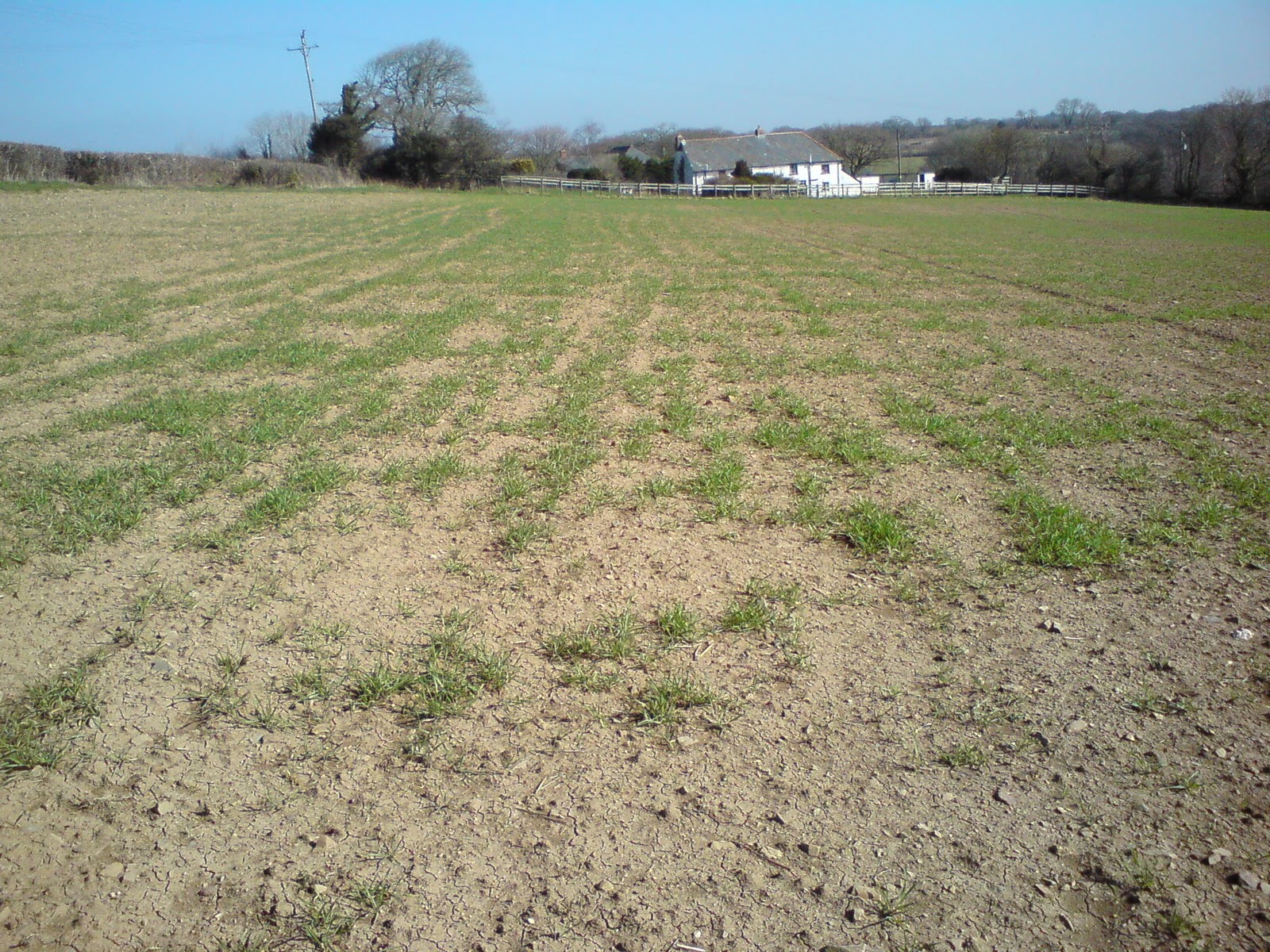
Winter Barley plots at Tregony, Matros in foreground, then Harlequin, Cadillac, California. Matros in rest of field. This field followed winter wheat and suffered some Take-All effects.

In the previous years (2012 and 2013) Avatar winter wheat has been the top yielding variety at both sites, in early and late drilling slots, wet year and dry year. A son of Istabraq and the top perfuming variety in Ireland and Scotland, it has proved itself as a big yielder in this maritime climate of the south west. A variety that was half a percentage point off going on the HGCA recommended list in 2012, it is a very reliable and farmer friendly variety. In trials at Exeter going back to 2008, it has always been in the top 5 in terms of outright performance and across a wide range of sites in the HGCA trials system it performed well. It was the variety that caught my eye back in 2009 at Exeter, I started including it in farm trials in 2010 and it has proven a very consistent and forgiving variety. planted early, it doesn't get too proud and full of disease like Istabraq can (thats why its always advised to plant Istabraq late down here, possibly the best wheat variety after maize), planted late (end of February, it has amazing tillering capacity and a fantastic yield potential. I have a case of it being planted the 19th of March this year and it has flowered and produced a great crop. That is nearly as forgiving as Claire! Due to it's high tillering capacity, it lends itself to the Claydon system of minimum tillage, as can be seen below.
Avatar drilled in November with a Claydon drill, near Crediton.

Avatar in a field thats been continuous wheat for 30 years, looking fabulous. Drilled at 230 seeds/sqm in late mid September 2013.


Avatar produces a good bright sample with a high specific weight.

Since starting this we have now harvested about 400acs of wheats, predominantly Istabraq and Avatar. Yields for Istabraq are in the 3.75t/ac range with a good specific weight, with Avatar in second wheat/continuos wheat slots doing the same and between 3.8 and 4.25t/ac in the 1st wheat slots, again with very good specific weights. There are are a few results that I am waiting on from the Crediton and Truro areas, but at the minute yields are promising for a difficult year.

I am hoping we will have the trial plots harvested in the near future which will then give us an indication of where the new varieties like Zulu, Panacea, Evolution and Revelation sit in the mix. Revelation does look promising at the minute, Panacea may surprise with its yield too.

More to follow soon.


Sunday, 12 May 2013

Interesting articles recently in the press.

Two landmark publications came out this last week (7th May), the fist being an article published by NASA on their predictions for global rainfall patterns in the future.The report highlights the correlations between increasing carbon dioxide levels in the atmosphere and the level of rainfall across all regions of the planet.If you are farming, I thoroughly recommend that you look at this as it is going to determine what and where we grow food, in particular Brazil, Southern Africa, Northern Australia and all countries around the Mediterranean.

The article can be found here:
http://www.nasa.gov/home/hqnews/2013/may/HQ_13-119_Rainfall_Response.html

The second article of note this week was the report that Carbon Dioxide concentrations in the atmosphere had reached the symbolic figure of 400ppm, the last recorded time this level had been reached previously was 3-5 million years ago. Now on its own, this probably doesn't register to highly on the radar, however a week earlier there was another related article pointing to the fact the increasing CO2 was leading to a more acid Artic Ocean and changing the way ice and currents flow, indeed there are suggestions that polar low pressure systems are becoming more frequent as a result which in turn is causing the erratic flow of the jetstream which in turn is influencing the weather in the northern hemisphere.

This article can be found here: http://www.bbc.co.uk/news/science-environment-22486153 whilst the article on polar lows is here: http://e360.yale.edu/feature/linking_weird_weather_to_rapid_warming_of_the_arctic/2501/

It seems that as farmers, we are going to be trying to produce food in ever changing and more erratic weather patterns as time goes on, which is going to make an event like 2012 more likely in future. In which case, we need to become better adapted to producing food in these scenarios, as the current financial risk vs reward ratio is unsustainable in its current guise of large corporates profiteering excessively in relation to the primary producers.

Tuesday, 20 November 2012

Weather issues!

Well most of us have and are having to deal with weather issues, most likely for the next 18 months as the after effects of this years weather ease their way through the next cropping year. What do I mean by this, well it matters little what crop you are growing, whether grass or arable, compaction and subsoil damage from stock and machinery will have been considerable this year and these are very noticeable in autumn sown crops already this year and will be evident in grass growth rates in the spring.

About 40% of autumn crops are in the ground down here in the Southwest, a large amount of grass reseeding never got done because the ground conditions were poor too and any Oilseed Rape that was drilled has sustained a prolonged spell of attack from slugs and what is left is now being piled into by pigeons en masse!

To top it all, spring cereal options are now difficult with the chronic lack of spring cereal seed available.  I am not panicking yet as I think there will be seed coming available after new year that has been ordered on the proviso the wheat that was planned is not drilled. I know a lot will say that because the ground is now so wet, there is no chance in hell of it being dry enough to drill by the beginning of February. I remember clearly the statements earlier in 2012 about it taking years to recover the subsurface moisture deficits in much of England due the extreme drought conditions, look where we are now 7 months down the track. If we get this very cold weather that some forecasters are predicting, winter ploughing and late drilling winter wheat is still an option, especially any varieties with Claire in their parentage. Last year we were drilling Istabraq on ground at 800ft on the 1st of March and it still yielded more than all the earlier drilled stuff.

So don't panic, there is time yet still to get winter wheat in the ground, we still have a lot of weather to go through before spring and hopefully that which is planted will have a deep enough root system to survive while the cold weather kills off the slug problem and does something to remedy the soil structure issues. Just remember to raise the drilling rates up towards the 450 seeds/sqm level to account for higher seed mortality and reduced tiller numbers and don't drill too deep!

Saturday, 16 July 2011

Wheat......Update on Demo plots.

The Cereals Event has been and gone, lots of flashy paint, plant and toys to entice anyone to part with a serious load of wedge/notes (depending from which side you come from). Lots of fancy stuff in the agchem arena and equally large and expensive machinery to apply it with. It seems every year the prices of these tools become ever more stratopheric, if inflation is supposed to be in the very low single digits, then you need a stiff drink and a new set of glasses to fathom the price increases in four wheeled machinery!

There has been a lot of comment in the farming press lately about wheat variety selections for the 2012 season, with emphasis as always being placed on the new upcoming varieties that have made the recommended list(RL). I personally have some misgivings about the way the list is put together, because I think that it doesn't always reflect what is actually happening with varieties in different regions, indeed soil types, even though there are North, South, East and West specifics. How does a wheat perform say on heavy wet land in Devon (when the land the RL trials are conducted on is light free draining reds near Exeter).  Likewise, ground in Dorset differs markedly from that in Kent, yet both count as South.

The RL trials are littered with the corpses of varieties that supposedly never made it onto the list because they failed, or were inconsistent over a multitude of sites. A classic example of this is a Nickerson bred variety called Lear, a variety way ahead in yield when it came out, Orange Blossom Midge resistance, superior septoria and rust resistance, fantastic grain quality and a good amount of straw, everything you could want in a western wheat. It didn't make the list because apparently it had weak straw. Well, tell that to the farmers who are growing it and getting exceptional yields from it! I remember Bill our wheat breeder reflecting that he should have fought harder to get it approved as it was a very good variety, however because of the process, not all candidates make it, so they were sanguine about it at the time, but regret it now. Commercial seed stocks are very limited as very few grow it. Likewise Deben now, supposedly outclassed by the newer varieties on the RL. Last but not least, Istabraq, dropped from the RL trials program now, considered an 'old' variety, but in last years trials at Exeter was joint top yielder at 118% with the highest specific weight. Go to Scotland, like I just have this week and you will see Istabraq outperforming the newer wheats hands down in the field, still the best distilling variety out there. Then there's Alchemy, still at 112% at Exeter last year, 4th highest yielder ahead of a lot of newer RL stuff, but supposedly outclassed by these same varieties on the printed RL books. To me, consistency of yield is more important than one years performance and knowing the genetic parentage of a variety is a vital clue to this consistency.

So this begs the question, why are we seeing a 3% yield increase roughly year on year in the RL system, but this is not being translated to farm level. Last year, someone I know in Wiltshire averaged 11.2t/ha (sold!)over 350Ha growing Solstice, Claire and Duxford(2nd wheat slot). You don't have to be a mathematician to appreciate the profitability of growing high yielding milling and feed wheats when wheat is trading at nearly £200/ton. Claire is 12 years plus old, yet it is still more than capable of producing good yields, even in difficult places like North Devon, so why are there people out there slating it and saying it's getting old and falling behind newer varieties? Is the process of selection producing varieties of high potential yield, but with poor to mediocre specific weights and hagbergs, which will sprout if you sneeze on them at harvest time? Are breeders, as a result of the RL system, being tempted to make quality sacrifices in genetic resistance to disease by releasing varieties with only single gene, rather than polygenic resistance factors, which then break down only a year or two after being released, or even whilst still in the trials stages? Is the drive by big chemical companies that are buying up small to medium scale cereal breeding companies limiting diversity of research? My fear is that this 'race' to release new varieties is leading us down a blind alley, where more and more genetic material is 'burnt' as varieties break down to rusts etc and resistant genes become fewer and fewer to the point that genetic modification becomes the only road available to maintain wheat production.

Is the new chemistry that is being applied to varieties negating yield performance in the field, are some of these tank mixes that are being put together actually depressing the plants abilities through phytotoxicity? How many farmers/agronomists are actually applying recommended rates and mixes as stipulated by manufacturers? Did you know that Nickerson tests a full range of different fungicide programs from different maufacturers over the course of a candidate variety going through the NL and RL processes, which once approved is freely available so growers can see which spray program produces the best result for that specific variety. I asked a very successful farmer this the other evening at one of my demonstration events, to which he replied no, never knew it, never seen them, his agronomist had never given him one. http://www.nickersondirect.co.uk/products/winter_wheat1.html  Check for yourself, the info is here and if it's not, then I sure can find it.

So, after all that, have a look at what these wheat varieties down near Tregony in Cornwall look like, some good, some not so good, lots to learn and observe, this has really been a 'shake-out' year for many wheat varieties and we aren't done yet! Have a look at the wheat near the end of the plots next to Duxford, This is Nickerson Original Deben treated with GPA. Looks better than a lot of the material in the plots, it will be very interesting to compare its yield to the ordinary Deben in the plots and the other varieties. Then there's Stigg, maybe not everyones cup of tea, but it does point the way we need to be looking for septoria resistance!

Tuesday, 17 May 2011

Yellow Rust!

Over the last 10 days I have come across a worryingly uncommon (for the very southwest) level of yellow rust in wheats and triticale, from way down by St Austell and Truro in Cornwall, to the Tamar Valley around Launceston, around Okehampton and now up around Holsworthy and Bradworthy in North Devon. It is also present in four varieties as of last week at the official Nickerson wheat trial site at Silverton, near Exeter. This last site, being closest to the midlands was not entirely surprising given the climate and locality.

Last week, four varieties were displaying symptoms. Another variety in a separate trial was also showing symptoms. Not entirely surprising given their rust ratings.

What I wasn't quite expecting to see was the level of infestation in my trial at Tregony way down in Cornwall. More worryingly was the level of disease in fields in the locality, some fields being yellow across the whole field. I have taken some samples to be analysed to see which strains are involved.

Leaf 2 of plants near Okehampton, disease just getting going.

More advanced infection near Tregony.

Another shot near Tregony.
The difference between a resust susceptable variety and a resistant one.
Classic focii of an outbreak of Yellow Rust. Near Launceston, Cornwall.

Major damage, this is Winter Triticale near Holsworthy. It only takes a short while to go from initial outbreak to this, that is why controlling the disease is so vital! What is more disturbing is the fact that most triticale varieties are being grown with supposedly good resistance to yellow rust, especially on organic farms. So to see this in a conventional farm is not good.

Tuesday, 10 May 2011

Maize under plastic 2011 trial.

A customer of mine  in Cornwall has finally decided to try out this maize-under-plastic method after being nagged and cajoled by his local contractor who has one of these special maize drills. This trial is for grain maize specifically, this system for forage maize is completely different and has some value in very unfavourable areas. Here are some photo's showing the results so far.

Drilled at the same time as the main crop which is Lorado, the earliest high yielding grain maize variety currently available. Please note the highlighted bit, I am not stating that it is the highest yielding variety, just that it's the earliest of the high yielders. This is an often overlooked factor when choosing grain maize varieties, outright yield is often the main selling point. I argue that it's no point growing this grain crop if you are expecting to harvest it in cold wet dark December, when the grain is more often than not contaminated by fusarium and other unpalatable moulds and diseases which spoil quality. Having a variety that will stand all the way through winter is hardly any advantage if the grain is rotten by then! Lorado is good in that it dries down very rapidly and is earliest to finish, when it's ready, don't hang around, go get it. If you wait, it will lodge just below the cob as previous post photo's show although grain loss is actually very small.

Lorado conventionally drilled next to Lorado under plastic. What is really interesting is that the Lorado is emerging better than the maize-under-plastic recommended varieties, as can be seen below.

Lorado emerging in these rows here very evenly and a lot more consistently.

Standard varieties in the first 10 lines, with Lorado on the outside 2 rows. Standard varieties really struggling to punch through the plastic compared to the Lorado.

One of the issues with this system of establishing maize in a dry year can be seen below. The rain has soaked in beautifully into the conventionally planted, but is bone dry under the plastic. The plants which haven't 'punched' through are under tremendous drought stress, are quite brittle in the stems and showing signs of damage. Bizarely the weeds under the plastic are flourishing as they have enough moisture to survive, even though this area has been sprayed with a pre-emergence herbicide. This can be seen in the photo's below.

Struggling to 'punch through' as it's claimed to.


Because the system of laying the plastic, spraying and drilling the seed is so task heavy and complicated, there is no way of banding a starter fertiliser into the seedbed. As a result, the plants have to scavenge for nutrients, something that maize does not do well. This I am sure is holding back growth and therefore inhibiting yield potential. The plants in the picture above this one if you look carefully are actually quite pale, compared to the plants planted conventionally, even though they are larger.

My main concern though looking at the picture above is weed control. Look at how big these weeds above are under the plastic, there is just no way of controlling these, you cannot over spray as the chemical will just land on the plastic sheet and maize just hates any weed competition. It's going to take a really impressive recovery from here to get me interested in spending an additional £160/ac over the conventionally grown grain maize.

Updates will follow, watch this space........

Tuesday, 26 April 2011

Weather worries!

Now I know a lot of media publications are printing stuff about how the climate is changing, that man made C02 is the cause of all the weird weather we have been experiencing lately.

I'm no climate change sceptic, having lived and farmed in the southern hemisphere and had to live with the vageries of El Nino and La Nina cycles, to my way of thinking what we are experiencing at the moment falls into this 5-7 year cycle. Last time we had dry weather was back in 2005, previous to that was 1995 that stands out. I remember that really bad drought we had in Zimbabwe back in the early 90's when it was so dry in the south that farmers were cutting thorn bush, then spraying it with a product called 'Brouse Plus', something that made the toxic tannins less toxic enough to stock  that they didn't die from eating it, but gave them enough sustenance to stay alive and not die of starvation.

Now I have been following the long range forecasts from Positive Weather Solutions on the right sidebar of my blog for a while now, they called the cold winter last year and the year before that, they also predicted the wet autumn and summer previously too. So when they issued a warning back in December that this was likely to be a dry spring I looked at what Bryce Anderson at DTN was saying too. Sure enough, he had picked up on the Southern Oscilation Index being at it's highest level for a very long time, greater even than that in 1976. I made a posting about this at the time, sceptically thinking it could go either way at the time. Well, speaking to farmers locally in Devon lately, the common thread is that this has been the driest start  they can remember, more so than 1976 where at least it was wet early so that 1st cut silage was a big one. This time, grass is wilting even before it's cut, with the effect that grass isn't really bulking up any more, hence farmers are flat out cutting and trying to harvest what is there before quality deteriorates further and praying that what nitrogen was applied has at least been utilised and is not going to end up in the clamps.

I know a lot of stock was turned out really early this year, not because the ground conditions were good, rather because there wasn't enough forage in the clamps to continue with full winter rations. I am now seeing stock that should have been out of fields, back in because they are running short on grazing elsewhere, with the knock on effect that 1st cut silage ground has been reduced. Farmers who are on summer grazing contracts and were hoping to have plenty of grass by 1st April after the sheep had been pulled out from winter keep are struggling to keep these grazing paddocks going due to the lack of grass growth from lack of rain.

It's interesting to see that those individuals who have been keeping half an eye on the weather conditions and have not held back on getting spring crops planted early are seeing the benefits of those decisions with these crops looking in good condition and with root systems able to manage the dry conditions. Those who have been following the calendar are now chasing ever diminshing levels of moisture in seedbeds that are drying out faster than normal with the current sunshine and cool dry easterly winds. I don't think I can recall hearing so many farmers  praying for rain in what we southern hemisphere types  would refer to as 'mud island'.


Very dry and dusty conditions at North Tawton on 26th April, drilling  maize trial. (hopefully it will rain enough to get going!)

The thing is, if you think UK has it bad, check the DTN report below, large parts of the southern US is looking at crop losses due to drought, whilst the northern states and Canada are way behind because it is too wet to cultivate. Then there crop losses in China and other parts that are going to play a part on total output this year. Hardly surprising then too see the wheat price for November 2012 rising to £158/ton. So forward selling, forward buying may be prudent, especially if you're a stock farmer wanting to fix some of your feed costs for next year, now.

So have a read of what Bryce is saying, makes for a sobering picture.
http://www.dtnprogressivefarmer.com/dtnag/weather

Tuesday, 8 March 2011

The cruel reality of a hard winter.


Bottom end of the same field.
Winter barley looking very sad, reality is that when you do the plant counts, the numbers just aren't there.
The best of the winter barley in this same field....
Click on the picture to see in full size, clearly shows exposed roots.
Another field of winter barley looking beyond recovery.
Einstein winter wheat, drilled in the normal timeslot, but this area of the field lies wet, normal year would have been OK.
If there were small roots, one could be forgiven for thinking too late drilled. However, there's plenty of roots here, most plants have really good root development, just not enough when you have this much frost heave in these heavy wet soils.
Contast this picture of late drilled Istabraq winter wheat with the Einstein above. This was drilled after maize in late October, but because it is slightly drier ground, not problems with frost lift.


And this is how you would expect the crop to be looking at this time of year. Panorama, fantastic group 2 winter wheat, wildly underated just like Istabraq. This was planted 1st week October 2010, drier ground near Bude.  Just shows the difference of 10 miles as regards factors affecting crop performance.

Tuesday, 4 January 2011

Frost damage/heave in Winter Wheat.

With the price of wheat futures rising well over £200/ton and the November price at over £170, things in he arable world are looking quite promising for this season. However, the recent very cold weather has played havoc with some wheat plantings here in North Devon, especially the poorer, wetter lands. With temperatures plunging down to -18C in places near Okehampton in the week before Christmas (I saw -13C at Exeter airport on Christmas eve), things got pretty chilly down here for a while, especially as the daytime temperatures struggled to get above -5C.

This prolonged cold spell for the whole month of December, followed by a very rapid thaw just before New Year has left us with some scenes like this below. There is hope yet that the damage can be salvaged later when Growth regulator is applied with a additional foliar feed of Multimax to boost additional root development and allow some plants to survive. A very cold dry spring won't help though if we have similar weather to last spring.


Fortunately I haven't come across any of my customers with total, or near complete loss of autumn seeds. Nickerson Original seed does come with a filmcoat package that both protects the seed from phytotoxic effects of seed dressings, as well as stimulates root and root hair development in the first 6 weeks of growth, something which is key in getting good autumn establishment. Yes it costs a couple of pounds an acre more, but with a winter like this last one, it certainly is going to pay off.


My seed in the foreground, the 2 fields on the bank directly behind aren't and have 50-90% losses. This below is a neighbours field of grass seeds...... Not Circle Leys, which would have come through OK given they have the same film coat.

Saturday, 4 December 2010

Cornish and North Devon wheat variety demonstration plots.

For the first time in many years, quite possible for the first time in Cornwall, I have put in two wheat variety demonstration plots to show farmers what these different varieties will do 'in their back yard' so to speak.

Nickersons has had a trial site just north of Exeter for many years, near Silverton, where a whole range of varieties from the recommended list(RL) are trialed to measure performance in the 'west'. This is all part of the recommended list certification process and the main site for septoria screening. It is also where all the new pre RL material is tested too, somewhere in the region of 300 new upcoming variety lines.The site features treated and non-treated trials to see what plants in-bred genetic resistance levels are to a range common fungal deseases.

There is normally an open day that is run by Masstock, with whom we share the site under the 'we do the land prep, plant it and harvest it, you spray it' arrangement. The site is on free draining,  fertile red soils that aren't really representative of the heavy clays and shales found in Cornwall and Devon south and west of Exeter, nor does it have the disease pressure from 60 inches of rain found elsewhere. After hearing the feedback from numerous farmers in Cornwall and North Devon about these non comparative issues, I have found two farmers who were prepared to undertake these demonstration plots.

The North Devon site is near Holsworthy, heavy wet clays, not the best ground in the parish, but representative of soils farmers are trying to grow wheat in and here is a short video of what they look like at the end of November.


The Cornish trial site is near Tregony, on the Roseland peninsular, not far from St Austell. There is a lot of wheat grown in Cornwall, mainly for stock feed, so this site is ideal to show local growers the strengths and weaknesses of these varieties. Both sites will have an untreated strip through them too so we can see what Septoria resistance there is, as well as demonstrating to those organic growers what they too can expect. This site has 5 more varieties than the other too which is an added bonus. There will be open days at both sites in the new year and a proper open day event as well at both just after the Cereals Event. Dates will be announced.

Thursday, 21 October 2010

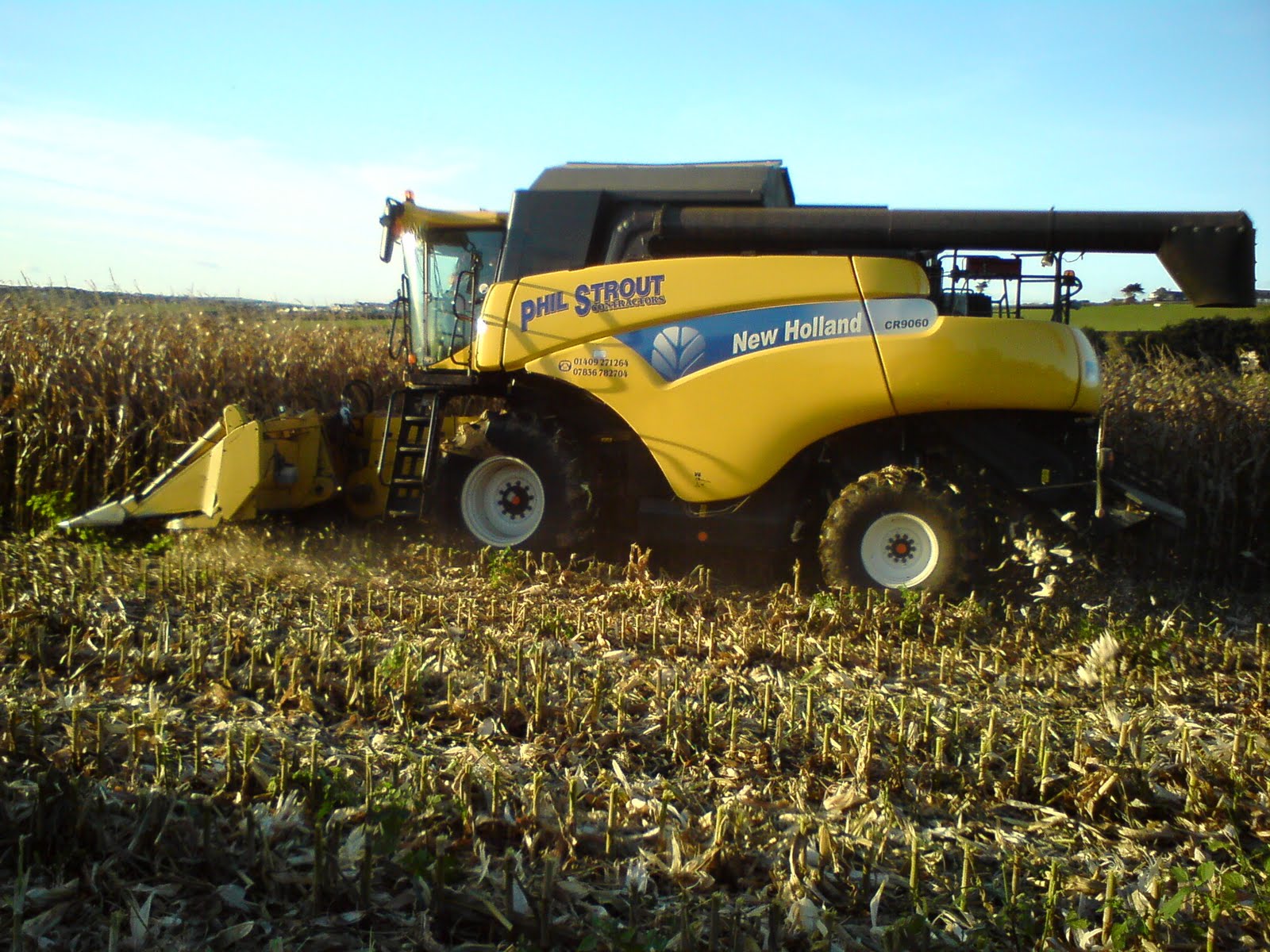
Combining Lorado at Bude


Never let it be said that Lorado is a short variety!


Lovely cornish autumn afternoon.

It's all happening!!!

Maize foraging is in progress, most of it is off, although a lot I think has been cut before it was fully fit, but the weather has been kind and the general feeling has been 'get it while you can'.


Lorado, the only early grain variety out there surprised us all by being ready as early as the 11th of October in some fields, the bulk being ready by the end of the week of the 16th, yields have been very promising, (even though the population was slightly higher than it should have been) at around an average of 5ton/ac at 32% moisture content. Very satisfactory.
Here are some pictures and video of the crop coming in.


Tuesday, 28 September 2010

North Devon Wheat Demo

For the first time in many years, we have a 14 varieties in the ground as of today at Holsworthy!

I think it is important in this day and age that we trial varieties outside of mainstream areas, really push and pull them from a disease pressure point of view, challenge them in heavy wet ground in a high rainfall environment. North Devon is not renowned as being part of the great grain belt of the UK, however it is an important livestock area and these animals need feeding. There is a lot of wheat grown in this area and there are many traditional methods being employed to grow it, along with very robust spraying programs that are becoming ever more costly. So the challenge is to try doing it slightly differently, utilise more organic forms of nutrition, utilise biogass as much as possible for Nitrogen requirements and see what varieties fare the best in this environment under a treated and untreated regime.

Thanks to David Prouse of Roy Prouse Contractors for allowing me to use one of his fields to do this demo and thanks to Steve Cleave who did the driving and drilling. Hopefully all will be revealed in not too distant future and we will have an open day to show farmers what we have achieved.

Wednesday, 1 September 2010

Harvest Update

The curse of that saint who got 40 days rain......well it's happened again...! Fortunately not to the same extent as last year, or as bad as 2008, but rain has definitely taken the shine off some farm harvests this year.
Winter Barley harvests have been respectable, with some outstanding specific weights achieved with Pearl, one grower getting figures of 3.25t/ac with a sw of 74!!
One common thread of information coming back with the rain interupting the barley harvest has been Suzuka brackling and dropping ears before the combine could get to it.
Wheat yields on the heavier soils have been reasonable, even on areas that were affected by the prolonged dry spell, with sw's in the high 70's. A number of farmers are claiming yields over 5t/ac on some varieties, one grower I know claiming Lear outyielded everything by 1t/ac and he's not one to make such claims lightly.
However, after last weeks heavy rains, there is a lot of sprouting wheat being now cut which is taking some of the shine off proceedings.
Here are a few photo's taken today of combining at Ashwater. Lets hope the weather holds out till it's all in!!

Thursday, 15 July 2010

Maize 2010 so far.

Cold, dry and a late start for many, although fortune so far has favoured the brave who planted early, got the crop started with the moisture that was already in the soil and then got rain just when needed to push the crops on. The predicted frost damage on early drilled fields has not yet materialised down here, even where drilled on the 16th of April when we had a week of hard frosts at the beginning of May.
16th April, Petrockstowe.
Beethoven with it's fantastic early vigour has lead the pack in the trials right from the start, although Lorado in the last ten days has really started a serious growth spurt and has caught it up in terms of stature.


24th May, Pertockstowe

3rd June, Bude.
A lot of crops with average vigour have needed a trace element/foliar spray to get them growing in the very dry conditions, especially those planted in May which weren't able to get a big enough root area before the sun and dry weather started to make life difficult for the small plants.
Contrary to MGA advice about cloddy seedbeds being OK, this has proved to be bad advice on heavier ground this year with very poor germination and plant counts where these types of seedbeds have been found. This may be OK on light loams and sands, but not on heavier clay loams in Devon and Cornwall. Compaction too has been a real issue on ground that was compacted in the wet last autumn with the tracks stil being visible this year, even after numerous passes with subsoilers and cultivators.
Compaction.....!
Going on growth stages, this year the crop on average is about 10 days ahead of where it was at the same time last year with a crop of Beethoven near Bude over 6ft tall at the end of June!


25th June, Petrockstowe.

Beethoven 30th June, Bude!